A single large power transformer can now take up to four years to deliver, and an entire project can wait on it. Credit: [TebNad / Adobe Stock]
The quiet machine that decides everything
There was a time when ordering a power transformer was a line item, not a risk factor. You specified the unit, issued the PO and built your project schedule around a delivery date you could trust. That time is gone.
Today, a standard power transformer averages roughly 128 weeks from order to delivery and generator step-up units stretch to about 144 weeks, according to Wood Mackenzie’s Q2 2025 survey. For the largest custom units, analysts now quote lead times of up to 4 years. Put plainly: a transformer ordered today may not energize until the decade is nearly out. When the delivery of a single steel box dictates the schedule of an entire interconnection, supply chain stops being a procurement footnote and becomes the critical path.
The shift from afterthought to bottleneck is the defining infrastructure story of this decade. And it has forced the industry to confront a new form of resiliency. For years, utilities have invested heavily in grid resiliency: hardening lines, modernizing substations, deploying microgrids and preparing for extreme weather. But now, supply chain resiliency has emerged as an equally essential discipline. If grid resiliency is about keeping the lights on during a storm, supply chain resiliency is about ensuring the equipment needed to build, expand and modernize the grid actually arrives.
A colleague recently joked that he remembers when sourcing transformers was so easy he barely thought about it. “Everything else occupied my attention,” he said. “Who would have thought transformers would become sexy?”
Yet here we are: the quietest piece of equipment on the system has become the defining constraint for data centers, grid modernization programs, electrified transportation, industrial load growth and even routine utility capital work.
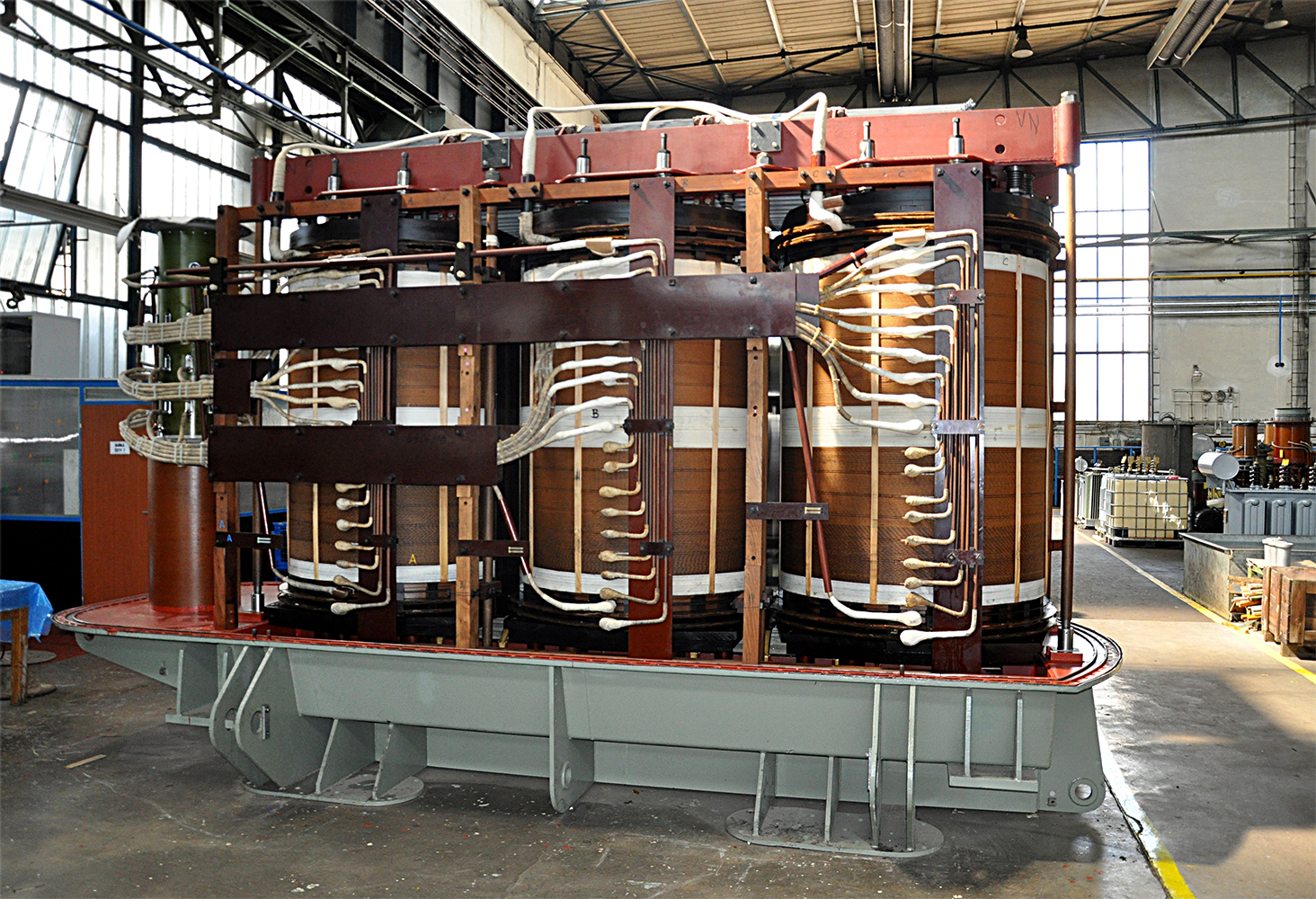
At the heart of every transformer is grain-oriented electrical steel, a specialized material with a single U.S. producer, making it the quiet chokepoint of the entire supply chain. Credit: [petrle / Adobe Stock]
How demand outran supply
It helps to understand the shortage as the collision of three forces rather than a single failure.
- Demand exploded all at once.
The grid is being asked to do far more than it was a decade ago. AI-driven data centers, the electrification of transportation and industry and aggressive grid modernization programs are all pulling from the same constrained pool of equipment. Since 2019, demand for generator step-up units has grown 274%, and substation power transformers are up 116%. Data centers, in particular, have become one of the most aggressive new buyers, often competing directly with utilities for the same limited manufacturing slots.
- The supply base couldn’t flex.
Transformer manufacturing is a historically low-margin, capital-intensive business and domestic capacity simply wasn’t built for this surge. The deeper bottleneck sits at the raw-material level: grain-oriented electrical steel (GOES), the specialized steel used in transformer cores. Cleveland-Cliffs is the only domestic producer, meaning that every U.S. manufacturer relying on domestic steel draws from a single well.
Compounding this, roughly 80% of large power transformers used in the U.S. are imported, exposing critical infrastructure to global trade dynamics and geopolitical pressures.
- Prices followed.
Constrained supply against surging demand created exactly the pricing power you’d expect. Power transformer prices have risen 77% since 2019, distribution transformer prices have risen 78–95% and generator step-up transformer prices have risen 45%.
There is a useful contrarian view worth airing, because resilience starts with an honest diagnosis. Some brokers argue the “shortage” is partly self-inflicted; it is a procurement problem more than a manufacturing one. They contend that the bottleneck lies less in factory output and more in the structure of utility and EPC procurement: layers of qualification rules, vendor lists and internal hierarchies that prevent alternative suppliers from reaching decision makers. The counterpoint is equally real: large power transformers are highly customized, heavily regulated assets, and many utilities face legitimate constraints tied to standards, testing protocols, cybersecurity requirements and domestic content rules. Both things are true. That tension — between moving faster and meeting legitimate requirements — is precisely where resilience strategy lives.
Building more capacity takes years
The first instinct is to assume new factories will end the problem. They will help, eventually. Hitachi Energy announced over $1 billion in investment, including a new plant scheduled to come online in 2028, and Siemens increased its commitment to $421 million for a transformer factory in Charlotte, North Carolina. In total, nearly $2 billion has been directed toward expanding North American transformer production, with new capacity projected to come online by 2028.
Here’s the caveat: new capacity does not help the project you’re building today. Projects executing between now and 2028 face the market as it exists today. Resilience, therefore, is not about waiting for relief. It’s about operating intelligently inside a constrained market for several more years.
Strategy 1: Buy slots, not boxes
The single biggest mindset shift is moving from transactional buying to strategic sourcing. In a scarce market, the slot in a manufacturer’s production queue is the asset and is secured years ahead.
Long-term supply agreements are becoming a competitive tool. Organizations that lock in delivery slots years in advance gain a scheduling advantage that cannot be bought at spot pricing once a project is ready to execute. Five-year projected plans and multi-year agreements are shifting from rare to routine.
Diversification is equally important. A resilient supply chain mirrors the diversification logic the industry already applies to energy supply. Just as a resilient grid blends solar, wind, storage, gas and transmission upgrades to reduce dependence on any single resource, a resilient supply chain blends domestic and international manufacturers, multiple regions and multiple GOES sources. The principle is the same: no single point of failure should be able to stall the entire system.
Engaging interconnection and planning teams earlier is another critical shift. Projects with flexibility on interconnect timing benefit from talking to utilities sooner, so equipment delivery realities shape the schedule rather than ambush it.
Strategy 2: Standardize and stockpile
One reason transformers are so hard to produce quickly is that they are bespoke. Over 80,000 unique transformer configurations exist, complicating standardization and procurement efforts across the industry. Every custom specification is a custom production run.
Industry-wide standardization is difficult. A newer utility in Southern California has very different operational needs than an older Maine utility, but internal standardization is achievable and powerful. Narrowing your own organization’s specification variants reduces complexity, shortens lead times and increases the likelihood that a spare or substitute unit can be sourced when needed.
Resilience-minded utilities are also rebuilding buffers. Storm stock inventories, spare transformer fleets, mutual assistance networks and shared reserves turn a fleet of individual buyers into a pooled, more shock-absorbent system. Regulators are helping clear the path through “sandbox” programs that accelerate approval of modular substations, mobile transformers and spares, cutting review times from years to months.
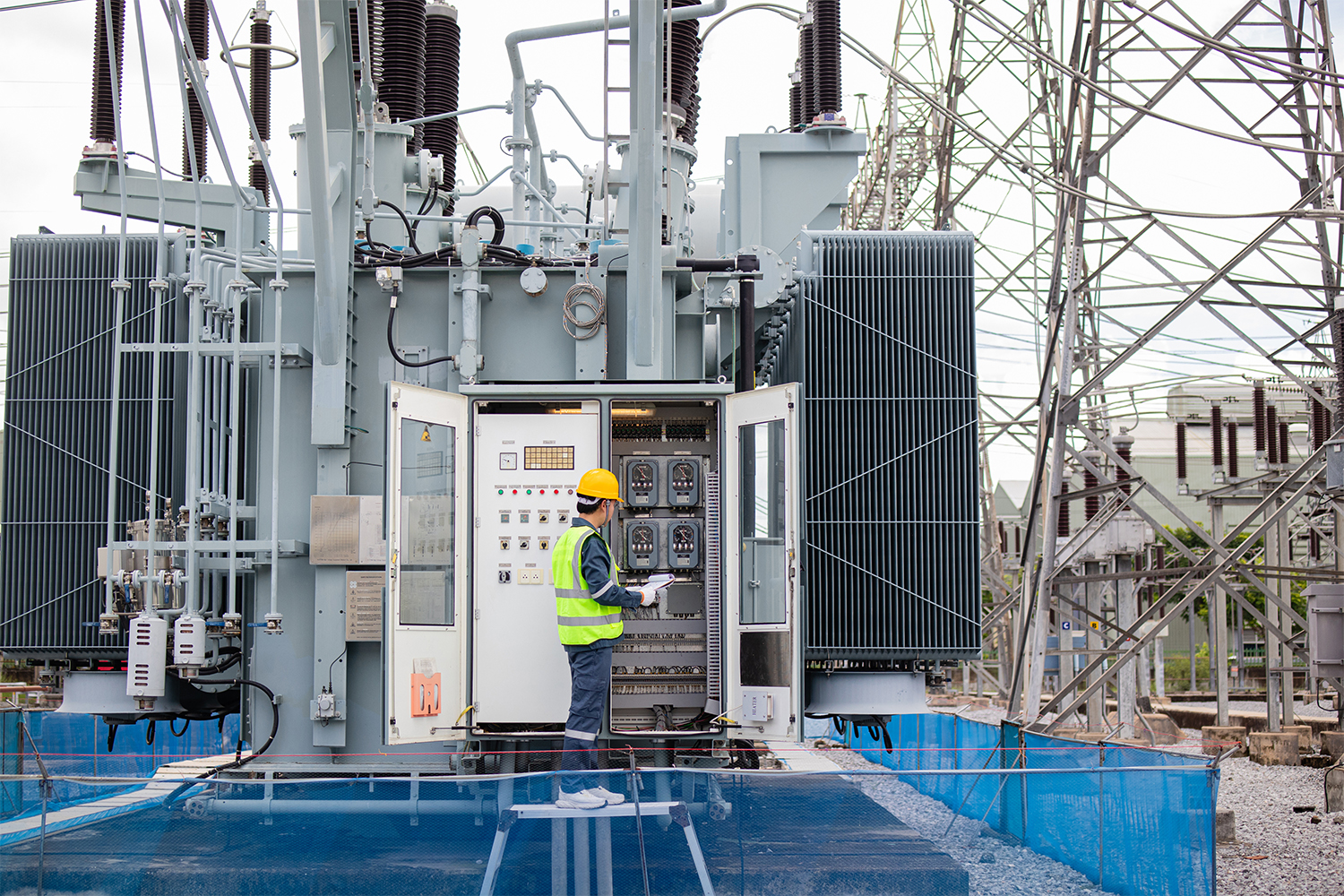
The cheapest transformer is the one you don't have to buy. Digital monitoring and grid-enhancing technologies stretch the capacity of assets already in the ground. Credit: [JD Studio / Adobe Stock]
Strategy 3: Defer demand with digital
This is where “Digital Transformation & Resiliency” becomes literal. The cheapest, fastest transformer is the one you don’t have to buy — because you can squeeze more capacity out of assets you already own.
Grid enhancing technologies (GETs) such as dynamic line rating (DLR), dynamic transformer rating (DTR), advanced power flow control, topology optimization and storage as a transmission asset increase grid flexibility and reduce overall investment costs by improving utilization of existing assets.
Utilities are already demonstrating how digital tools can buy time in a constrained transformer market. PG&E (along with several other large utilities) has deployed strategies such as dynamic transformer rating, dynamic line rating and topology optimization to safely stretch the capabilities of existing assets, effectively increasing usable capacity and deferring capital upgrades when new transformers simply aren’t available. These approaches don’t eliminate the need for new equipment, but they reduce near-term capital costs and help utilities navigate multiyear transformer lead times.
Reconductoring is the heavy-duty cousin. Replacing old wires with advanced high-capacity conductors can increase line capacity by 25–100%, and, in many cases, offers the lowest-cost and fastest option to address capacity shortfalls. In Texas, American Electric Power upgraded two 120-mile-long 345 kV lines, increasing capacity by 40% without new rights-of-way.
Digital supply chain visibility is another emerging pillar of resiliency. Knowing where every critical unit sits in the production and shipping pipeline turns surprises into forecasts.
Putting it together: The resilience playbook
No single move solves a four-year lead time. Resilience comes from layering tactics so that procurement, engineering and planning are pulling in the same direction. For a mixed audience juggling all three, the strategies above reduce to a short, durable playbook.
- Plan earlier and buy slots, not just boxes. Treat the production slot as the asset and secure it years ahead through multi-year, multi-vendor agreements. The earlier procurement enters the capital-planning conversation, the more options you keep open.
- Diversify geographically. Spread sourcing across regions, manufacturers and material suppliers so that no single trade dispute, plant outage, or single-source dependency can stall an entire project.
- Standardize internally. Narrow your own specification variants to shorten lead times and widen the pool of spares and substitutes you can draw from when a unit is delayed.
- Rebuild buffers. Expand storm stock, spare-transformer fleets and shared reserves, and use mutual-assistance networks to convert isolated buyers into a pooled, shock-absorbent system.
- Defer demand with digital tools. Deploy dynamic ratings, topology optimization and reconductoring to extract more capacity from existing assets, while treating these as complements to physical capacity, not permanent substitutes.
- Make supply-chain visibility permanent. Track where every critical unit sits in the production and shipping pipeline so disruptions become forecasts you can plan around rather than surprises that derail a schedule.
Taken together, these moves reframe the supply chain from a back-office function into a strategic discipline;, one that determines whether projects are energized on time.
The bottom line
The transformer shortage is the clearest reminder in a generation that the energy transition runs on physical assets that take time to build. And it has revealed something fundamental: supply chain resiliency is now as essential to grid planning as grid resiliency itself. Hardening lines and modernizing substations will not keep projects on schedule if the transformers required to energize them are still years away. The ability to source, secure, and diversify supply is no longer a procurement function; it is a strategic capability.
Without intervention, extended lead times and elevated costs risk becoming the new normal, potentially slowing data center growth, delaying grid modernization programs and constraining electrification. But “new normal” is a choice, not a fate. The organizations that will keep their projects on schedule through 2028 and beyond are the ones treating supply chain resiliency as a discipline: planning earlier, standardizing specifications, rebuilding buffers and using digital tools to stretch the capabilities of the assets they already have. Utilities such as PG&E have shown that dynamic transformer rating, dynamic line rating and topology optimization can safely increase usable capacity and defer capital upgrades when new transformers simply aren’t available — but these tools buy time; they do not replace the need for physical equipment.
Most importantly, supply chain resiliency requires global diversification. The United States simply does not manufacture enough transformers to meet current or future demand, and new domestic capacity will not arrive fast enough to close the gap. Domestic content rules and tariffs may shape procurement, but they do not change the underlying math: the grid cannot be built, modernized, or expanded on domestic supply alone. A resilient supply chain blends domestic manufacturers with trusted international suppliers, ensuring that timing, quality, and cost remain aligned with project realities. In a market where a four-year delay can derail an entire business plan, availability becomes a form of resiliency.
The box in the substation yard may be quiet, but the strategy around it can no longer afford to be. Supply chain resiliency (global, diversified, digitally informed and strategically planned) is now one of the most important tools the industry has to keep the energy transition on track.

James Whaley is a seasoned marketing and creative leader with more than 25 years of experience in design, branding and communications, with a strong focus on the energy industry. His work has supported the growth of solar, construction and energy infrastructure companies by shaping brand identities, driving market engagement and developing strategies that respond to the evolving needs of the energy sector. In his current role as marketing & IT manager at GRID Infrastructure Solutions, he continues to craft innovative movements that connect utilities, developers and EPCs with the solutions that power America’s energy future.
References
- PG&E — PG&E Powers Ahead on Breakthrough Grid Innovation with Dynamic Line Rating, Asset Health Monitoring Demonstration (Dec 11, 2025), PR Newswire https://www.prnewswire.com/news-releases/pge-powers-ahead-on-breakthrough-grid-innovation-with-dynamic-line-rating-asset-health-monitoring-demonstration-302639621.html
- IndustrialSage — Power Transformer Lead Times Hit Record Highs as U.S. Grid Equipment Shortage Deepens (May 2026) https://www.industrialsage.com/power-transformer-lead-times-us-grid-shortage/
- Congress.gov / CRS — Electricity Distribution Transformers: Supply, Tariffs and Policy Options (Apr 2026) https://www.congress.gov/crs-product/R48933
- Columbia SIPA Center on Global Energy Policy — Unlocking Transmission Efficiency through Grid Enhancement Solutions (Apr 2026) https://www.energypolicy.columbia.edu/publications/unlocking-transmission-efficiency-through-grid-enhancement-solutions/
- U.S. DOE — Energy Department Announces $1.9B Investment in Critical Grid Infrastructure (SPARK program, Mar 2026) https://www.energy.gov/articles/energy-department-announces-19b-investment-critical-grid-infrastructure-reduce-electricity