Despite almost 98% of electrification rates, Latin America is still facing access disparity challenge, mainly between rural and urban areas. To this day, many remote communities such as those in the Amazon basin and Andean highlands still long for energy access.
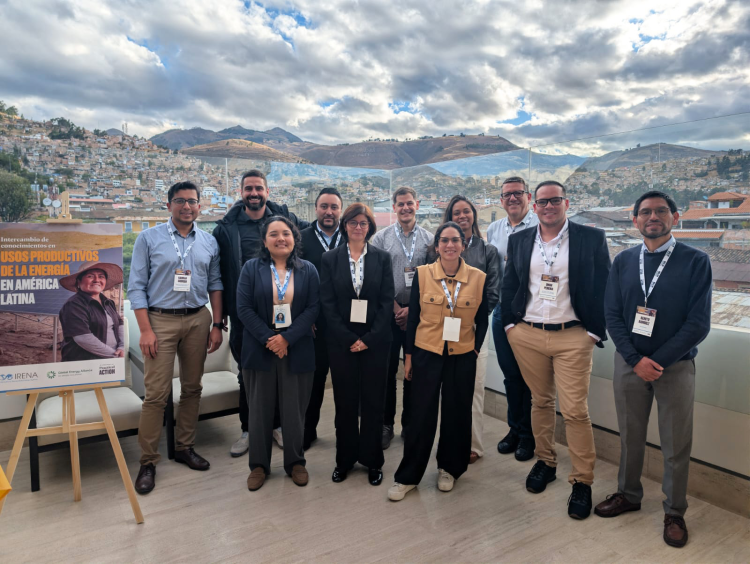
In areas untouched by the grids, decentralised renewable energy (DRE) such as micro-hydropower and solar systems with battery storage emerges as solutions to fill the access gaps, bringing light to remote and rural areas. The benefit of DRE, however, is beyond electricity. When put into productive uses, electrification in these areas can generate income, strengthen local economies, and create sustainable opportunities. To help scale successful models and accelerate the use of DRE to support rural livelihoods, the International Renewable Energy Agency (IRENA), Global Energy Alliance, and Practical Action organised a knowledge exchange workshop in Peru, last month. Held as part of the Global Initiative on Transitioning Remote Communities to Renewable Energy', the workshop allowed participants from Bolivia, Brazil, Colombia, Ecuador, and Peru to exchange lessons learned and best practices of productive uses of renewables in remote communities.
Agriculture, agro-processing, irrigation pumping, cold storage, carpentry, and product transformation were some of the activities discussed in the context of improved productivity and income, driven by renewable power. During the three days, participants learned from each other on how taking their unique social, economic, and environmental characteristics into account whilst deploying DRE promotes their respective economic inclusion, productive opportunities, and sustainable development.
The exchange confirmed that energy infrastructure alone does not guarantee an immediate economic transformation of a community. For electricity to become an effective enabler of sustainable development, renewable solutions must respond to local value chains, accompanied by technical assistance, capacity strengthening, and supported by public policies.
Examples showcased during the workshop include:
Since the installation of 56 rooftop solar panels connected to battery storage, the community of Soledad completely moved away from polluting diesel generator, reducing operating costs and greenhouse gas emissions. Not only the project built the capacity of locals in constructing and installing the solar system, the 32.66 kilowatt-peak capacity generated from the system also provides reliable energy which supports productive uses, including a plantain processing facility. The electricity enables continuous operation of the processing equipment, significantly increasing the production of dehydrated plantain chips for export to European market. With reliable electricity, the facility serves as a key source of sustainable income for around 240 indigenous families in the region.
The solar-powered boats in Achuar territory in the Ecuadorian Amazon have become a game changer for indigenous people living along the coastline. Far from the grids and roads, the Achuar people were isolated and had to rely on imported gasoline. The solar-powered boats free them from polluting, costly fossil fuels and improve their mobility. Solar power stations charge the boats while also providing power for lighting and internet in the indigenous villages. With the boats, villagers can go through the river to study at school, engage in commercial activities at the markets, carry out tasks in the cities, and monitor their rainforests. The existence of the boats has enhanced the livelihoods of communities across the Amazon with minimal environmental impact.
- 1. Solar-powered processing plant for plantain products in indigenous community of Soledad, Peru.
- 2. Solar-powered boats along the Ecuadorian Amazon coastline
The examples showcased during the workshop however highlighted the limited attention given to micro-hydropower plants. Much of the exchange was oriented towards solar energy, even though Latin America has significant hydro potential that also offers sustainable economic opportunities.
Wind energy similarly received less attention during the workshop, despite existing experiences in the region. Participants thus view the importance of identifying collaborations for wind energy and promote greater diversification of renewable sources, to strengthen energy systems resilience while supporting sustainable development.
Another important reflection was the lack of private sector participation in scaling up renewable solutions in rural communities. To this end, participants agreed that the public sector has a fundamental role in creating incentives and mechanisms that facilitate investments and promote more sustainable collaboration models.
For more information

336 East 45th Street, 11th Floor
New York New York
United States 10017
www.irena.org